Check out our new Speakers Bureau brochure - suitable for advertising and spreading the word!

NARSOL is pleased to work with your organization in providing speakers for your internal education, outreach efforts, conferences, and special events.
Our speakers are experienced advocates for NARSOL's vision of creating a society free from public shaming, dehumanizing registries, discrimination, and unconstitutional laws. Each speaker brings a unique perspective and will add value to your event.
A contact form is linked to each speaker's profile. Interested organizations are encouraged to reach out through the form, and either a NARSOL Speakers Bureau representative or the speaker will respond to coordinate specifics.
For additional information, help with speaker coordination, or to be considered as a NARSOL speaker, please email
NARSOL Speakers Bureau ([email protected]).
Meet Our Speakers

Danielle Bailey, Ph.D.
- Collateral consequences of sex offender legislation;
- Social support and registration; and
- Economic consequences of registration.
Danielle Bailey, Ph.D.
Danielle Bailey, Ph.D., is an associate professor of criminal justice and the director of the Center for Excellence in Teaching and Learning (CETL) at the University of Texas at Tyler. She received a Ph.D. in Criminology & Criminal Justice from the University of Nebraska at Omaha (2015), a Master of Forensic Science from George Washington University (2010), and a B.S. in Forensic and Investigative Science from West Virginia University (2008).
Dr. Bailey’s primary research focus is the impact of sex offender policy on individuals convicted of sexual offenses and their family members, including economic and marital strain, social support, and reintegration concerns. Dr. Bailey has testified before the Texas House Committee on Urban Affairs (HB 387, 2017) and the Nebraska Judiciary Committee (LB 290, 2015) based on her research in this area. She has published in multiple peer-reviewed journals, including Criminal Justice Policy Review, American Journal of Criminal Justice, and Criminal Justice Studies, among others.
Speaking Topics
- Collateral consequences of sex offender legislation for individuals convicted of sexual offenses and their family members;
- Impact of registration and other post-conviction policies on social support, marital relationships, and family strain; and
- Economic consequences of registration for individuals convicted of sexual offenses.
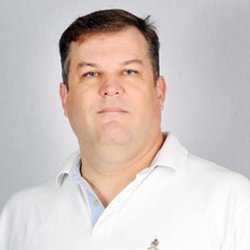
Dwayne Daughtry
- LGBT civil rights versus sex offense civil rights and their similarities;
- "Third rail politics" tactics (how to advocate controversial topics to elected officials); and
- What is Public Policy, and insight as to how analysts are often ignored or overlooked.
Dwayne Daughtry
Dwayne is a retired enlisted soldier with the U.S. Army. His primary duties were as a human resources specialist and leader. He is a graduate of Arizona State University in organizational leadership with a minor in non-profit studies. He has a Master of Science in public administration from the University of South Dakota.
Dwayne is actively involved in legislative concerns around sex offense policy and human rights policies. He engages with the community to educate about sex offense collateral consequences and the causes and effects of harm by registries in general. He focuses on a broad range of outreach and partner programs, including the NAACP, N.C. Justice Centers, LGBT communities, homeless shelters, social services, and veterans' issues.
Speaking Topics
- LGBT civil rights versus sex offense civil rights and their similarities;
- "Third rail politics" tactics (how to advocate controversial topics to elected officials); and
- What is Public Policy, and insight as to how analysts are often ignored or overlooked.
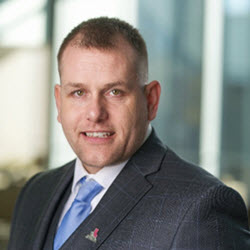
David Garlock
- Sharing my story;
- Reentry for those on the registry; and
- Tools for obtaining employment on the registry.
David Garlock
David is a survivor of child sexual abuse who took the life of the abuser and spent 13 ½ years in prison. He now advocates for those on the registry, believes strongly in redemption and restoration, and is a regular speaker on relevant topics.
Speaking Topics
- Sharing my story;
- Reentry for those on the registry;
- Tools for obtaining employment on the registry; and
- Changing the narrative.
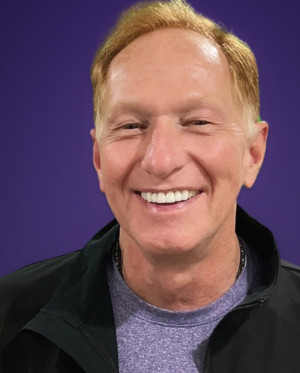
Michael Harris
- Rewriting the Story: From Lived Experience to Policy Change: how public narratives shape laws—and how storytelling can reshape them;
- When Fear Becomes Law: how fear-driven policymaking creates ineffective and harmful legislation; and
- Life on the List: The Human Reality Behind the Registry: a lived-experience perspective on stigma, exclusion, and reintegration.
Michael Harris
Michael Harris is a filmmaker, advocate, and speaker whose work focuses on the intersection of storytelling, public perception, and criminal justice reform. Combining lived experience with legislative advocacy and more than four decades in film and media, Harris has become a distinctive voice on how narrative shapes policy and how storytelling can create meaningful social change.
He serves as president of Indiana CURE, director of Indiana Voices, and coordinator of the therapist referral network for B4U-ACT. His advocacy work includes legislative analysis, testimony preparation, public education, and coalition-building surrounding registry policy, reentry barriers, constitutional rights, and the broader collateral consequences of criminal justice legislation.
As a filmmaker, Harris is the creator and producer of the feature film Life on the List, currently in development. It is a dramatic exploration of the human realities surrounding registry laws and social exclusion. Through both film and public speaking, he works to challenge fear-driven narratives and replace them with stories rooted in evidence, humanity, and lived experience.
Harris’s presentations are known for blending emotional authenticity, policy insight, and cinematic storytelling to initiate compelling discussions on justice, stigma, reintegration, and cultural change. His signature keynote, “Rewriting the Story: From Lived Experience to Policy Change,” explores how public narratives shape legislation and how advocates can reshape them to drive lasting reform.
Speaking Topics
- Rewriting the Story: From Lived Experience to Policy Change: how public narratives shape laws—and how storytelling can reshape them;
- When Fear Becomes Law: how fear-driven policymaking creates ineffective and harmful legislation;
- Life on the List: The Human Reality Behind the Registry: a lived-experience perspective on stigma, exclusion, and reintegration;
- Collateral Consequences and Invisible Punishments: the lifelong barriers created beyond a criminal sentence;
- The Myth of Public Safety: examining evidence, effectiveness, and unintended consequences;
- Exile in Plain Sight: housing, employment, and social barriers facing registrants;
- The Constitution and Registry Expansion: due process, ex post facto concerns, and civil liberties implications;
- How Registry Policies Affect Families and Communities: the overlooked impact on spouses, children, and support systems; and
- Effective Therapy for MAPs (Minor - Attracted Person): Is therapy causing more harm than good.
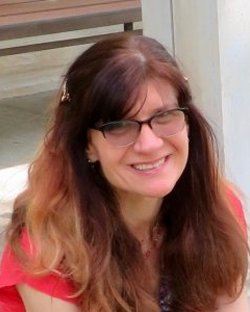
Emily Horowitz, Ph.D.
- Impact of registries and related laws on those who have completed incarceration and supervision;
- Impact of registries and related laws on family members of those listed; and
- Failure of registries to reduce sexual recidivism or make communities safer.
Emily Horowitz, Ph.D.
Dr. Horowitz is Professor and Chair of Sociology and Criminal Justice at St. Francis College (Brooklyn, NY). At St. Francis, she founded and co-directs the Justice Initiative (a nationally recognized program that offers mentorship and scholarships to those directly impacted by the criminal-legal system during re-entry and those currently experiencing incarceration). Her scholarly research addresses the causes and consequences of mass incarceration, focusing on the harms of conviction registries and banishment laws.
Her latest book, From Rage to Reason: Why We Need Sex Crime Laws Based on Facts, Not Fear (Bloomsbury Academic, 2023), explores the human carnage wrought by decades of draconian and fear-based sex offense policies. She is also the author of Protecting Our Kids?: How Sex Offender Laws Are Failing Us (Praeger, 2015), which was awarded a 2016 Choice Outstanding Academic Title by the American Library Association, and co-editor with Law Professor Larry Dubin, of Caught in the Web of the Criminal Justice System: Autism, Developmental Disabilities and Sex Offenses.
Professor Horowitz frequently engages in advocacy efforts and public scholarship to challenge myths and misinformation that lead to ineffective and draconian laws. Select recent news publications and media include "The Real Monsters" (a 2022 essay in Inquest: A Decarceral Brainstorm), a Reason article about the man wrongfully convicted of raping prominent author Alice Sebold (2021), a NY Daily News editorial about the Supreme Court hearings for Judge Ketanji Brown Jackson (2022), and participation in an Intelligence Squared podcast (2023) debating the sex offense registry.
Speaking Topics
- Impact of registries and related laws on those who have completed incarceration and supervision;
- Impact of registries and related laws on family members of those listed; and
- Failure of registries to reduce sexual recidivism or make communities safer.
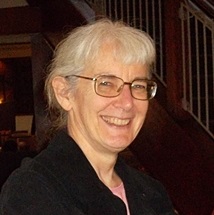
Brenda Jones
- NARSOL's history, vision, mission, and goals;
- NARSOL's views on any current topic of interest; and
- Vivante Espero's purpose, goals, and relationship to NARSOL.
Brenda Jones
Brenda has been involved in this cause since September 2009. She started by seeking support but quickly recognized the magnitude of the pain and despair experienced by others affected by these draconian laws. When a high-profile murder in Maryland sent lawmakers scurrying to pass tons of tough-on-sex-offenders laws, Brenda dove in headfirst and, as she says, “I have never looked back.”
Brenda has been executive director of state affiliate FAIR (Families Advocating Intelligent Registries) since its inception in 2010 and, in 2012, became the first executive director of then-RSOL. Under her administration, NARSOL has seen many changes: increased transparency, the launch of a membership program, and a more robust state affiliate initiative.
Speaking Topics
- NARSOL's history, vision, mission, and goals;
- NARSOL's views on any current topic of interest;
- Vivante Espero's purpose, goals, and relationship to NARSOL; and
- NARSOL Fearless Support Groups.
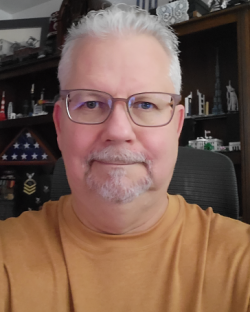
Philip W. Kaso
- NARSOL/Vivante Espero, its vision, mission, and goals, etc.;
- My personal story: Life on the registry and overcoming; and
- My personal insight to: "I'm a child rapist" published on NARSOL.org.
Philip W. Kaso
Philip W. Kaso is a retired US Navy Chief Petty Officer and registered citizen living in West Virginia. He has an impactful story and believes “stories are the art of our lives.” Philip has been actively involved in civil rights and sexual offense law reform for the past decade. He’s a lifetime member of the national civil rights organization National Association for Rational Sexual Offense Laws (NARSOL) and 2016 NARSOL Pearl award recipient. Additionally, Philip is a co-creator/mentor for the NARSOL Fearless Project, which is dedicated to creating dynamic, self-sustaining registered citizen specific support groups around the country.
Philip currently serves as a director on the boards of NARSOL and its foundation, Vivante Espero, and is chair of the Vivante Espero Investment Committee. He holds an Associate of Science in finance from Hawaii Pacific University, a Bachelor of Science in Business Administration from the University of Phoenix, and is an MBA candidate at Liberty University. In addition to his national civil rights efforts on behalf of NARSOL and its foundation, he is the Executive Director of West Virginians for Rational Sexual Offense Laws (WVRSOL).
WVRSOL was established in 2020 as an unincorporated non-profit association and affiliate of the National Association for Rational Sexual Offense Laws (NARSOL). WVRSOL advocates for registered citizens in West Virginia with the mission to make the 2020s the decade known for criminal justice reform, rational sexual offense laws, and restorative justice.
Speaking Topics
- NARSOL/Vivante Espero, its vision, mission, and goals, etc.;
- My personal story: Life in the registry and overcoming; and
- My personal insight to: "I'm a child rapist" published on NARSOL.org.
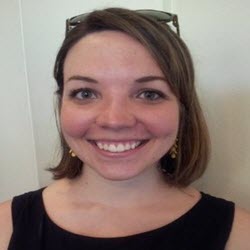
Jennifer L. Klein, Ph.D.
- SORN legislation and its impacts;
- Economic impacts of registration; and
- Social isolation of registrants and family members.
Jennifer L. Klein, Ph.D.
Dr. Jennifer L. Klein is an Associate Professor of Criminal Justice at the University of Texas at Tyler. She graduated with her doctoral degree from the University of Florida in 2014, where she also completed her Master's (2011) and Bachelor of Arts (2009) degrees, all in Criminology, Law & Society.
For more than a decade, Dr. Klein has focused her research on examining the effects of sex offender registration and community notification (SORN) laws on those required to register. Most recently, Dr. Klein and colleagues have been examining the economic impact of registration over time. This work is important to understanding the financial constraints placed on those required to register and their family members.
Dr. Klein's work can be found in a variety of different journals, including the American Journal of Criminal Justice, Criminal Justice Policy Review, Justice Policy Journal, and more.
Speaking Topics
- SORN legislation and its impacts;
- Economic impacts of registration;
- Social isolation of registrants and family members; and
- Legislative change.
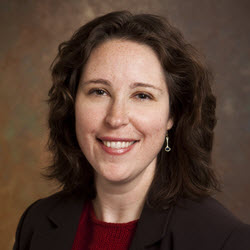
Chrysanthi S. Leon, J.D., Ph.D.
- Impact of the registry;
- Sex offense recidivism; and
- Religious communities and re-entering persons.
Chrysanthi S. Leon, J.D., Ph.D.
Chrysanthi Leon, JD, PhD, is Deputy Dean of the Honors College at the University of Delaware and Associate Professor of Sociology and Criminal Justice with secondary appointments in Women and Gender Studies and Legal Studies. She received her graduate degrees from UC Berkeley. Leon is an interdisciplinary scholar in penology, law, and society who teaches courses on law and social science, sex crimes and punishment, and criminal justice and mental health.
Her book, Sex Fiends, Perverts and Pedophiles: Understanding Sex Crime Policy in America, is available from NYU Press. Leon is co-editor, with Katie Hail-Jares and Corey Shdaimah, of Challenging Perspectives on Street-Based Sex Work (Temple University Press).
Dr. Leon has consulted on sex crime issues for a number of agencies, including the U.S. Attorney’s office and the Justice Center of Louisiana, and speaks regionally and nationally on sex offender issues, including media commentary in venues such as NPR’s NYC affiliate, Takeaway, and Al Jazeera America.
Speaking Topics
- Impact of the registry;
- Sex offense recidivism;
- Religious communities and re-entering persons; and
- History of US sex offense policy.
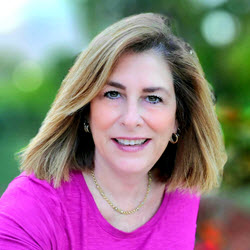
Jill Levenson, Ph.D., LCSW
- Registry & re-entry;
- Public health & prevention of sexual abuse; and
- Trauma-informed care.
Jill Levenson, Ph.D., LCSW
Dr. Jill Levenson is a Professor of Social Work at Barry University in Miami, FL. She is the Coordinator for the Trauma-informed Training Initiative at Barry’s Center for Human Rights & Social Justice. She has published 5 books and over 100 articles, with a focus on treatments and policies related to sex offending and trauma-informed care in forensic and clinical settings.
Her research has been funded by the National Institutes of Justice, CDC, and the National Sexual Violence Resource Center. Dr. Levenson is a licensed clinical social worker in Florida, USA, and counsels survivors, perpetrators, and families impacted by sexual assault and interpersonal violence. She has provided training in more than 20 US states, Canada, Mexico, Australia, and New Zealand.
Speaking Topics
- Registry & re-entry;
- Public health & prevention of sexual abuse;
- Trauma-informed care;
- Housing restrictions;
- Family members of registrants;
- Treatment for people who have sexually offended;
- Restorative justice;
- Trauma & criminality; and
- Post-conviction traumatic stress.
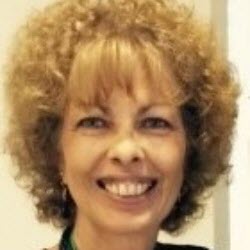
Mary Sue Molnar
- Harm to families;
- Meeting with legislators; and
- General registry and registration information.
Mary Sue Molnar
Mary Sue Molnar is the founder and executive director of Texas Voices for Reason and Justice, a 501(c)(4) nonprofit, grassroots organization.
She has been active in advocacy for the past 12 years, speaking out against the counterproductive and stigmatizing laws and policies that affect people who have committed sex crimes and their family members.
Speaking Topics
- Harm to families;
- Meeting with legislators; and
- General registry and registration information.
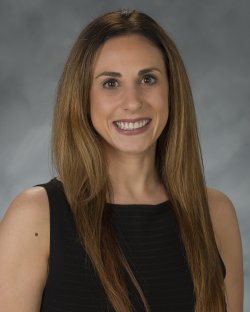
Alexa Sardina, Ph.D.
- Restorative justice and sexual harm.
Alexa Sardina, Ph.D.
Alexa Sardina, Ph.D., is an Associate Professor at California State University, Sacramento, in the Division of Criminal Justice.
Her scholarship focuses on how restorative processes can be used to address sexual harm. Dr. Sardina co-founded Ampersands Restorative Justice and co-hosts the popular podcast Beyond Fear: The Sex Crimes Podcast.
Speaking Topics
- Restorative justice and sexual harm.
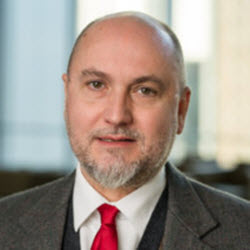
Robin Vander Wall
- Civil rights;
- Criminal justice reform; and
- Re-entry.
Robin Vander Wall
Robin spent more than six years in the Virginia penitentiary after being convicted of computer solicitation (law enforcement sting operation). Prior to his conviction, he was active as a professional political consultant on a number of state and federal campaigns. At the time of his arrest in 2003, Robin was a third-year law student at Regent University School of Law (Virginia Beach) and was scheduled to receive joint degrees in Law and Political Management the following spring.
He holds a Bachelor of Arts in political science from The Citadel in Charleston, South Carolina. From 1993 to 1997, he was publisher of the Citizen, a weekly tabloid of politics and culture. Robin was a 2018 Leading with Conviction fellow in the 2018 cohort of JustLeadershipUSA, one of the nation’s most distinguished prison reform initiatives. Robin is the founder and president of Vivante Espero, which exists to support the National Association for Rational Sexual Offense Laws (NARSOL) on whose board Robin has served for a decade.
Speaking Topics
- Civil rights;
- Criminal justice reform;
- Re-entry;
- Sex offender registration laws;
- Voting rights amendment;
- Privacy rights amendment;
- Organizational development;
- Earned media outreach;
- Direct mail marketing;
- Fundraising;
- Donor acquisition and cultivation;
- Volunteer management;
- Print publications;
- Legislative process; and
- 1983 litigation
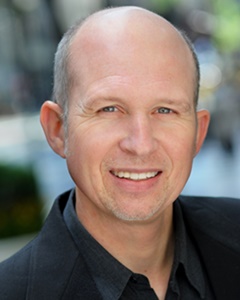
Steven Yoder
- General registry law;
- Residency restrictions; and
- Collateral effects of registries and related laws.
Steven Yoder
Steven Yoder is a journalist who has covered a range of domestic policy issues for national magazines and news sites, including the Washington Post, PBS.org, Salon, Reason, The American Prospect, and others.
While his focus is domestic policy, he specializes in criminal justice, especially the impacts of sex-offense registries and related laws.
[Note: Steven is not affiliated with NARSOL or its foundation, Vivante Espero, and all opinions are his own and don’t represent those of other people, institutions, or organizations, including NARSOL and Vivante Espero.]
Speaking Topics
- General registry law;
- Residency restrictions;
- Collateral effects of registries and related laws;
- Media coverage of those with a sexual offense record;
- Strategies for rolling back (at least partially) residency restrictions; and
- Media advocacy.