

Sex offender residency restrictions–a harmful response
Updated 4/23/2026; originally published 2/4/2025 at narsol.org as Sex offender residency restrictions: bad, bad public policy.”
By Sandy . . . Residency restrictions for persons required to register as sexual offenders are often enacted for no reason other than neighboring towns have implemented them. They spread like wildfire, and like that 
destructive force, they wreak their own form of havoc, making it more and more difficult for registrants to find decent housing for themselves and their families. This, in turn, makes it more and more difficult for them to create the stability they need to become productive citizens, which, according to research, is what drives down recidivism.
What with adding more people to the registry and in some cases making the laws retroactive, the number of individuals caught up in this maelstrom of flame grows exponentially each year.
The spark that starts the blaze is one we all share, the drive to keep our children safe. Residency restrictions, however, are an inappropriate and contraindicated response to that desire. They are based on three assumptions that are contradicted by evidence:
Residency restrictions assume most child sexual abuse is committed by persons unknown or barely known to their random victims when in reality 93% or higher of cases involves someone well known to the children who have been specifically chosen.
The percentage of situations in which a prior relationship exists between an abuser and a child victim varies dependent on the age of the victim. A study done by the Office of Juvenile Justice found that for very young children, family members and very close acquaintances comprise close to 100% of their offenders while for teens, those categories make up 94.3%. The U.S. Department of Justice, in a mega study, found that overall, 93% of the offenders of children and teens were either family members or trusted acquaintances (p.10).
The policies presume offenders choose victims based on residential proximity, which is not supported by research.
Residency restrictions create zones around schools, daycare facilities, and often parks. These laws and policies, once begun, spread throughout a state with unstoppable ferocity. A two-state study, Michigan and Missouri, did not support the mistaken theory that living close to one of these was a factor in repeat sexual offenses against children. Another study examining several states found “. . . proximity to schools and daycares, with other risk factors being comparable, does not appear to contribute to sexual recidivism. These data do not support the widespread enactment of residential restrictions for sexual offenders” (introduction).
Residency restrictions assume that most sexual abuse is committed by repeat offenders, which research shows to be inaccurate.
On average, a significant majority of registered sex offenders are one-time, first-time-convicted offenders. A study in New York found that “. . . over 95% of all sexual offense arrests were committed by first-time sex offenders, casting doubt on the ability of laws that target repeat offenders to meaningfully reduce sexual offending” (abstract), and a study from the university of Tennessee had very similar findings. They report, “Another factor constraining [sex offender registries’] effectiveness is that past studies have shown that . . .‘94.1% of those arrested for child molestation were first-time sex offenders’ ” (conclusion of major findings).
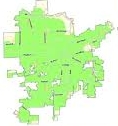
Restrictions often force offenders away from support systems, treatment, stable housing, and employment opportunities, which are crucial for successful reintegration. These are the elements associated with remaining offense-free. Some areas are so encompassed by residency restrictions that homelessness has escalated, especially in states where residency restrictions are aggressively implemented, states as diverse as Wisconsin, Florida, North Carolina, Illinois, and many more.
On the opposite end of the spectrum is the state of Kansas, which actually has a page on its DOC website about why residency restrictions do not work; the state passed legislation in 2006 prohibiting its jurisdictions from implementing them.
What drives down reoffense? Housing and employment

stability, access to evidence-based treatment, amd family and community connectedness. What makes those things difficult, sometimes impossible? Residency restrictions.
Are there individuals for whom restrictions from a specific type of place is appropriate? Almost assuredly, and they should be handled on an individualized basis.
Creating “umbrella” laws that indiscriminately restrict everyone listed on a state’s registry, or everyone of a certain classification or tier, thus creating pockets of homeless registrants and acting as a barrier between registrant and rehabilitation, is more than just inappropriate and contraindicated.
It is unrestrained madness.