NARSOL & WVRSOL File Second Federal Lawsuit Challenging West Virginia’s $125 Annual Registry Fee
By Philip
Charleston, WV – June 17, 2026 – The National Association for Rational Sexual Offense Laws (NARSOL) has filed a second federal
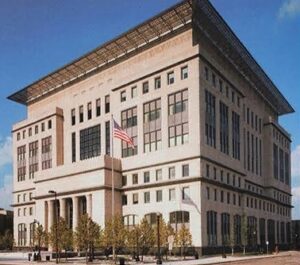
lawsuit in the Southern District of West Virginia challenging the state law that imposes a $125 annual fee on individuals required to register as sex offenders.
The lawsuit, Basham et al. v. Mitchell, filed on behalf of West Virginia’s 6,450 registrants, argues that the fee, which became effective on January 1, 2026, constitutes an unconstitutional punitive fine rather than a legitimate administrative cost.
The Challenge
Under W. Va. Code Ann. § 15-12-2(o), registrants must pay $125 annually or face property liens, regardless of their ability to pay. The state expects the fee to generate over $800,000 per year.
Where the Money Goes
According to the complaint, none of the collected fees are earmarked for sex offender registration functions. Instead, the funds will:
- first support mental health counselors, seminars, and training for current and former West Virginia state police employees—whether or not they work with the registry;
- then fund any other expenses “essential to the general operations of the State Police.”
The complaint emphasizes that no fees will be used for “sex offender notification, registration, verification, or compliance.”
Constitutional Claims
The complaint, filed under 42 U.S.C. § 1983, raises an Ex Post Facto constitutional claim.
Ex Post Facto Clause (U.S. Constitution, Article I, Section 10)
- Unlike the earlier Kaso v. Mitchell case, this lawsuit does not assert claims under the Eighth Amendment, the Due Process Clause, or the Equal Protection Clause. Instead, it focuses exclusively on the Ex Post Facto Clause.
- Plaintiffs argue that the annual fee constitutes a retroactive punishment because it was enacted in 2025 and later amended in 2026, long after their convictions and sentences became final.
- The complaint contends that the fee is not a genuine regulatory fee but rather a punitive fine because:
- It is imposed solely because of a past criminal conviction;
- It can be imposed annually, often for life;
- Nonpayment triggers a judgment lien against the registrant’s property;
- Revenue is used for state police mental health programs and general operations rather than registry administration.
- Plaintiffs further argue that the statute fails the punitive-effects analysis described in Smith v. Doe and Mendoza-Martinez, asserting that it resembles punishment in purpose and effect.
About NARSOL & WVRSOL
The National Association for Rational Sexual Offense Laws is a civil rights organization dedicated to promoting evidence-based policies and constitutional protections for individuals affected by sex offense laws.
West Virginians for Rational Sexual Offense Laws is NARSOL’s West  Virginia state affiliate that advocates for registered citizens in West Virginia. We are working to make the 2020s a decade known for criminal justice reform, rational sexual offense laws, and restorative justice.

its’ $150.00 in S.C.
I call it an illegal “stay out of prison tax”
IF this is not stopped it can increase to whatever.
Law enforcement is responsible for maintaining the registry any financial increase should be the responsibility of the government to cover the additional cost due to they are the ones who created the law.