

Oklahoma Lawmakers Take a Hard Look at the ‘Sex Offender’ Registry
By John . . . Oklahoma lawmakers spent most of an afternoon on a question the state has dodged for years: does the sex offender registry still do the job it was built for? The joint interim study hearing ran roughly three hours and heard from researchers, prosecutors, judges, treatment providers, police, defense attorneys and a survivor advocate.
Senate Majority Leader Julie Daniels (R-Bartlesville) says she came to the issue through a constituent who wanted a pardon. She was “quite surprised that we had something in place that did not allow any pardon or any removal.” Later came a panicked text from someone who feared a new bill would keep them from their grandchildren for another 10 years. That was when she started asking whether the state was “undermining public safety with the very broad net that we have cast.”
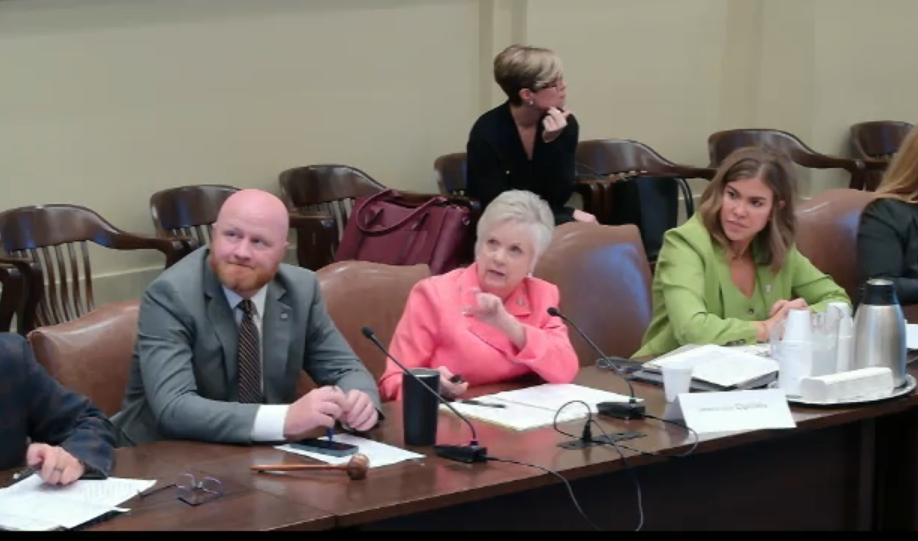
Representative Suzanne Schrieber (D-Tulsa), her partner on the study, said the registry has been “layered on and layered on and layered on” since it was created to answer a fair question: how do you protect families from the most dangerous predators?
A far cry from the original registry
Daniels’s slides showed how far it has drifted. The 1989 act covered nine statutes, required registration for 10 years, shared information only with police, put no limits on where anyone could live, go or work, and treated noncompliance as a misdemeanor. Today it covers 27 statutes, with tiers of 15 years, 25 years or life. Names are online. Residency restrictions extend 2,000 feet, the second-highest in the country after Mississippi’s 3,000. Employment is restricted, and failing to comply can be a felony. The act has been amended 23 times. Of the 8,344 Oklahomans on the registry, 74% are on it for life.
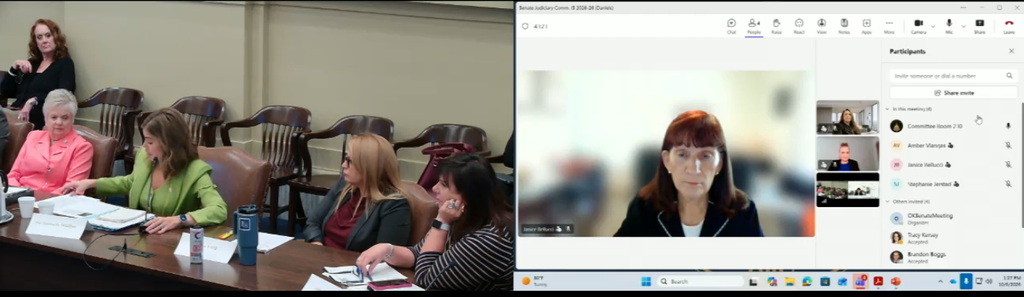
Attorney Janice Bellucci, a California civil rights attorney and executive director of the Alliance for Constitutional Sex Offense Laws, testified about how the registry took shape. The first registry began in Los Angeles in 1947, she said, aimed only at gay men, and federal laws in 1994, 1996 and 2006 spread it nationwide. She highlighted the Supreme Court of the United States’ decision in Smith v. Doe (2003), in which the Court held that registration is not punishment. That ruling, she noted, leaned on a “frightening and high” reoffense claim from a Psychology Today article that put the rate as high as 80% with a promise that if the article’s author was allowed to “treat” people with sex offenses, he could cut the rate in half. She said the author later retracted his baseless claims, but the Court changed nothing. She shared that earlier this year, Michigan’s Supreme Court found registration is punishment, largely because of its collateral consequences.
How people get sorted matters just as much. Oklahoma sets a person’s tier by the offense of conviction. There is no individual risk assessment. A board created to develop one was dissolved without producing anything, and the statute says the assigned level can never be reduced by the level assignment committee, the Department of Corrections, or a court.
Brittany Gendron testified. She was the child victim in the case that put her mother on the registry. Her mother was convicted of a non-contact offense more than 25 years ago, served 15 days in county jail, and is now disabled with cognitive decline. Every 90 days, Gendron takes her to register. “Each visit feels less like accountability and more like watching a sentence renew itself,” she said. Residency restrictions keep her from bringing her mother home, and her mother’s status keeps blocking long-term care. “I was the child this system was supposed to protect. And today, I am the daughter left to navigate its consequences.”
“We have assessed a label”
Dr. Stephanie Jerstad, an assistant professor of criminology at Millersville University of Pennsylvania and a recent NARSOL Conference plenary speaker, studies aging and criminal justice and spoke about a group that rarely comes up in registry debates: people who are old, seriously ill, or cognitively impaired and still have to register. Her central point was short. “A conviction is part of a person’s history,” she said. “It is not by itself an assessment of the risk that person poses today.”
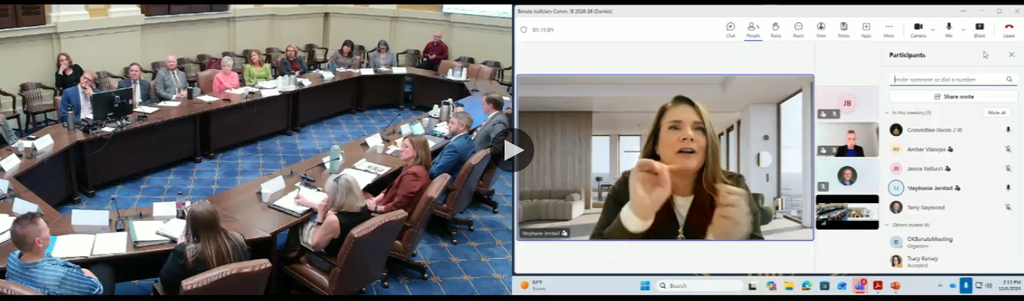
She pointed to the age-crime curve and to work by Dr. Karl Hanson that put the five-year sexual reoffending rate at around 3% for people in their 60s, with rates falling further after that. The average nursing home resident in the U.S. is about 81. Against that, she said, “we may be making placement decisions about someone in their 70s, 80s, or even 90s based primarily on a conviction that occurred decades earlier.”
Her sharpest line came when she described registry status standing in for a risk assessment: “If the decision begins and ends with ‘this person is on the registry,’ we have not actually assessed the individual that is standing in front of us. We have assessed a label.” Individualized review, she added, is not the soft option. “Using contemporary individualized information is not less protective of the public. It is more precise public safety decision-making.”
Her own research on long-term care found that facilities are reluctant to admit people with sexual offense histories, and that those decisions don’t always track medical need. When a facility says no, she said, “The person doesn’t stop needing nursing care. The responsibility moves.” It moves to hospitals that can’t discharge patients, to corrections when someone overstays a sentence because no facility will take them, and to relatives who end up handling dementia care, toileting, medication, and registry compliance “without any kind of skilled nursing training or medical training, without financial support.” The cost doesn’t disappear. It lands on another public system or on a family.
Jerstad shared that other states have built exits. Georgia lets courts consider relief for people in hospice, skilled nursing or elder care, or who are 80 and older under certain conditions. Virginia lets a guardian petition when a physical condition makes reoffending and registering impossible, with periodic review. Alabama offers relief from residency restrictions for terminal illness or permanent immobility, and Colorado recognizes severe disability. She did not ask Oklahoma to copy any of them. She noted that Oklahoma’s House Bill 3606, which would have allowed a petition in cases of permanent impairment, passed the House and then stalled in Senate Judiciary.
Pressed on liability, Jerstad said facilities already manage risk for every resident, and that people with dementia and no criminal history are more likely to act out sexually because of the disease. She cited a 2005 Government Accountability Office (GAO) study in which administrators said they worried more about residents with Alzheimer’s and dementia than about those with offense histories. Her answer was not to drop safeguards. “The solution is the right safeguards for the actual person,” she said, meaning individualized assessment, care planning, and supervision.
What survivors actually need
Amber Vlangas, executive director of the Restorative Action Alliance and recent NARSOL Conference keynote speaker, joined as both an advocate and a survivor of institutional sexual violence as a child and of military sexual trauma. She opened with a warning: survivors are not a monolith, and many never get heard. Then she set two statements side by side. Sexual violence is a serious problem that “is not up for debate.” And “current sex offense policy doesn’t actually decrease sexual harm. And in fact, it creates some of the exact conditions that increase risks of violence.”
Her numbers run counter to the idea that the criminal system catches most harm. Of every 100 sexual assaults, she said, 27 are reported, five lead to an arrest, and fewer than three end in incarceration. About nine in 10 abused children are harmed by someone they or their family know and trust, often a relative. She argued that undercuts the idea that sexual violence is mostly committed by strangers.
On risk over time, she said each year offense-free lowers the odds of sexual reoffense by about 12%. After 10 to 15 years, most people with a sexual offense conviction are no more likely to commit a new sexual offense than someone with a nonsexual record.
She named four things that drive violence: exposure to violence, isolation, shame, and not being able to meet economic needs. Registries, she argued, feed all four through vigilante violence, unstable housing and work, and stigma that reaches whole families. They can also keep children quiet. Survivors often tell her group they didn’t report because they knew the person harming them would be removed from the home, sometimes the household’s main earner.
Residency restrictions drew particular criticism. She cited a 2015 Department of Justice SMART Office review that found they do not reduce recidivism and may raise risk, along with results from Jacksonville, Florida, and from Michigan and Missouri.
She also described what the registry hands survivors: information with no context. One person her group worked with learned that a neighbor was registered and wanted to sell their home, without knowing anything about that neighbor’s rehabilitation or actual risk. The result, she said, is “affecting survivors with information without context.” Meanwhile, the system “siphon[s] resources from services and support” toward punishment and control.
What do survivors want? To be believed, to have a say in what happens, to get answers, to be physically safe, and to get practical help like housing, job retraining, and culturally sensitive therapy. “The justice piece of it is a component, but it is not the whole pie,” she said.
She ended pointedly. “Asking survivors to carry the full weight of this policy analysis is unfair and it is not theirs to bear,” she told lawmakers. The loudest voices tend to be the most privileged, she said, and survivors harmed inside families lose out when only those voices are heard. “Survivors’ pain is being weaponized to create policy.” Her test for any bill is whether it ends cycles of sexual violence. “Honoring survivors means examining the evidence. It means weighing your outcomes.”
“A community problem”
The last extended remarks came from Jacqui Ford of the Oklahoma Criminal Defense Lawyers Association, a defense attorney and the group’s past president. She called the hearing “the bravest conversation I’ve heard happen in this building in a very, very long time,” then set the tone: “I do not think blame and shame are in any place in this. This is a community problem. It’s going to require a community solution. But we have to trust the science, and we have to trust the evidence.”
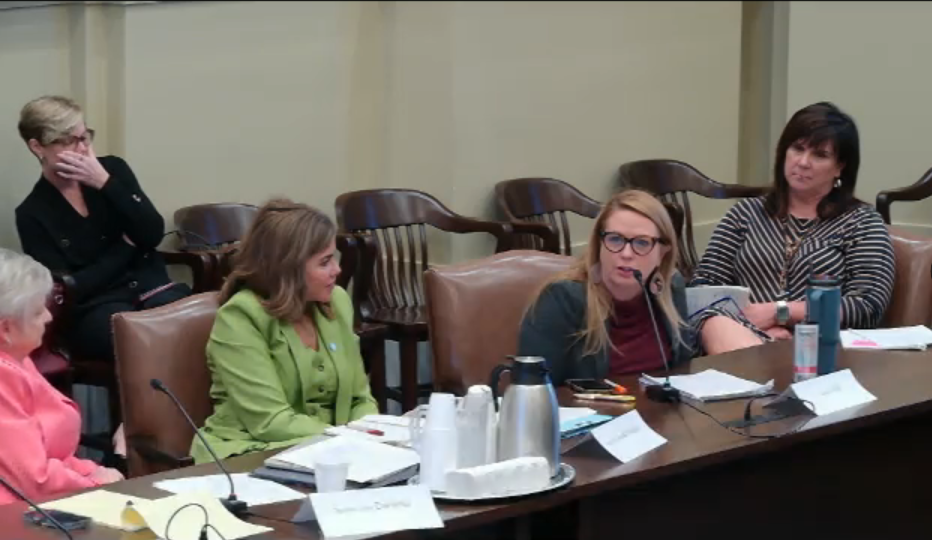
The detail she kept returning to was plea offers. “The same offer that I get when they first get arrested with prison time and lifetime registration is the exact same offer that I get after they’ve been in treatment for two and a half years and completely changed their lives and healed the underlying cause of what got them in the criminal justice system in the first place, which is oftentimes abuse and addiction and trauma.”
Part of the reason, she said, is pressure. Elected judges who “bank on the treatment working” risk a campaign from a “dark money PAC” claiming they went easy on sex offenders, and legislators face the same threat. What’s missing is a way out. “I know we have good judges who want to do it, and they just need to have a path. And I know we have good prosecutors who see the humanity, and they need a path. And DOC needs relief. They need money. They need tools. They need assessments. And it starts right here.”
Her examples were concrete. A client in Cleveland County was charged with failing to comply with registration after setting up tables for a church event before the children arrived. And then there are juveniles: “taking pictures of yourself is manufacturing child pornography and selling it is distributing it.” She has three teenage boys, she said, and the fear of them landing on a registry comes up at home all the time.
She also rejected the idea that sex crimes are a special category and urged lawmakers to look at defendants’ childhoods and at what they lack now. The task, she said, is to see that “people are more than the worst thing that they have ever done.” On people pushed into homelessness by residency rules: “What does a person who doesn’t have a house and doesn’t have a job and doesn’t have money do to eat? I’m going to suggest to you that they commit crimes.”
She finished on a plain fact. People on the registry come back to their neighborhoods, no matter what the legislature does. “We live amongst them,” she said, so the work has to be done “with integrity and compassion and humanity and for the victims.”
Law enforcement and treatment providers provide perspective
Even the more cautious voices agreed some cases need fixing. They disagreed on how much to change.
Ryan Stephenson, assistant executive coordinator of the District Attorneys Council, said the statutes also cover “the boyfriend who’s been preying on children while mom’s been at work for years.” He asked lawmakers to avoid fear-mongering but to remember “here there be monsters,” and he noted that the current system at least tells a defendant their level on sentencing day. Will Drake, the district attorney for District 11, said Gendron’s situation could be adjusted, though he worried about unintended consequences.
Brenda Carter, a counselor and member of the Association for the Treatment and Prevention of Sexual Abuse, has treated sex offenders since 2005 and once worked in the corrections treatment program. She called tools like the Static-99R well-validated and said, “sexual offending is a behavior. It’s not a person.” She put reoffense rates at roughly 3% to 11% and argued that restrictions pushing people into homelessness raise risk.
Nicole Dulany, who manages the Department of Corrections’ sex and violent offender registration unit, said her nine staffers track 11,341 active offenders and that the unit goes by what the statute says on paper, with no role in assessing anyone. Rockford Brown, a sex and violent offender investigator with the Payne County Sheriff’s Office, said removal “would be beneficial” for some people and pointed to Gendron’s case, but noted that recidivism figures only count the people who get caught.
District Judge Leah Edwards of Judicial District 21 said any court-based change to a tier would need a statute giving courts that authority, plus funding and procedures for indigent defendants in rural counties. Another panelist called the 1997 Fields v. Vreel decision, which leaves people in corrections’ control once they are in custody, a separation-of-powers problem lawmakers can legislate around.
Lawmakers floated a few ideas: reassessing which crimes sit in which tier, using the factual statement in a plea instead of the statutory charge, and adding safety valves for specific situations. Stephenson confirmed the legislature has the authority to change tier assignments.
The discussion to continue…
Senator Daniels said the hearing “doesn’t end the discussion,” and Senator Brent Howard (R-Altus), the committee chair, closed by noting these statutes “weren’t built in one day.” The ideas that came up most were a petition path for aging and medically incapacitated registrants like the one in House Bill 3606, individualized risk assessment, court review of tiers over time, and a rethink of which offenses belong in which tier.
AI note: The author used an AI-generated transcript of the hearing to compose this article.



 NARSOL
