“The oldest fundamental interest”
By Sandy , , , In 2000, in a case named Troxel v. Granville, the Supreme Court of the United States described the interest of parents in caring for their children to be, “. . . perhaps the oldest of the fundamental liberty interests recognized by this Court.”
And indeed, for the vast majority of Americans, the right to live with and parent our own

children is taken for granted. However, that right is subjugated for those found to have harmed their children, and for a smaller sub-set in one state, it is denied completely for those who have done nothing at all to harm their own children.
While several states have codified prohibitions and restrictions on persons with sexual offense convictions in regard to their own children, they appear to be tied to stringent requirements—narrowly tailored–and/or have built-in pathways to ending the prohibition. Apparently Alabama’s alone goes furthest. In Alabama, one conviction for any sexual offense involving a child, including people whose offense involved no contact with a child, renders many parents being barred for life from living with their own children as long as they are minors.
A man named Bruce Henry challenged that law as being unconstitutional.
In 2013, Mr. Henry had pled guilty to possession of child sexual abuse material. He served five years, relapsed in 2019 by viewing pornography while on probation, and his supervised probation was increased. He was clearly in the demographic that would place him under Ala. Code § 15-20A-11(d).
In August 2021 a child was born to Henry and his wife. Before the year was out, he had brought a 14th amendment constitutional challenge against the sheriff and the county attorney of his county and the attorney general of the state of Alabama.
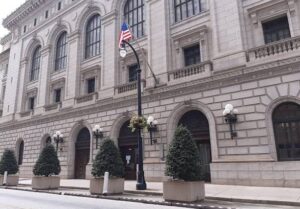
The case, Henry v. Abernathy, would go through three courts with each one finding essentially the same thing: The law was found to be unconstitutional because it is not sufficiently narrowly tailored. While lower courts found this to be the case on its face, the final decision is that it is unconstitutional as applied to Mr. Henry.
But the prohibition is breached. Precedent is set.
Upon the last decision September 29, 2026, a journalist with the Alabama Courthouse News Service reached out to NARSOL—(National Assc. for Rational Sexual Offense Laws)–for a comment, which he published unedited: “Any law or practice that keeps parents from parenting their own children when no crime has been committed against those children is not only unconstitutional but also cruel. It causes harm not only to the children and parents involved but to society as a whole as it undermines the basic structure of society–the family.”
NARSOL first wrote about the case in May of 2025.
NARSOL is thankful for courts that are willing to speak out concerning laws and practices that are unconstitutional and sincerely hopes that this decision is but the beginning in Alabama and indeed the Eleventh Circuit.
We are grateful for journalists and media outlets that still report the news objectively, showing both sides of an issue without bias or editorializing.
We are especially thankful for Mr. Henry and his persistence and determination to gain that most basic of rights, the right to fully parent his own child.
According to U.S. Laws, “The case could have far-reaching effects on similar laws in other states. Legal experts will be watching closely to see how this decision influences future cases involving sex offenders and parental rights.”
They will be watching—and so will NARSOL.