

Insured Against Grace: When Risk Management Becomes Theology
By Matt . . . Houses of worship seem to be this place where many go to escape the world. Of course they are! For many of us, maybe it is a was a place we gathered for Christmas, Easter, Diwali, Eid, Passover, a baptism, a wedding, a bar or bat mitzvah, a funeral, or simply the ordinary rituals that marked our lives and connected us to community.
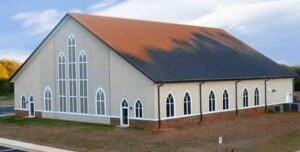
Many sought these places in an attempt to return to society, and many had doors closed in their faces, some completely and some more subtly. Finding a place, for those who could get through the doors, meant sitting in the back row and keeping their voices down.
Who makes these decisions? How did we arrive at practices that seem so incompatible with the nearly universal themes of redemption, repentance, restoration, and human dignity that span monotheistic, polytheistic, and other religious traditions.
And perhaps more important: Are these decisions actually theological? Or have houses of worship quietly allowed insurance companies, risk-management consultants, and institutional fears of liability answer theological questions for them?
“MinistrySafe,” which provides screening software geared towards houses of worship, published promotional material quoting leading executives from some of the top insurers of worship places. One CEO warns that “…sex abuse insurance coverage is being restricted, excluded, and eliminated by some insurance companies.” Another continues, saying, “One [sexual assault] claim can devastate a church, its reputation, and even its existence.” These statements are both in support of an overarching and more telling statement in the literature: “In the past…the decision as to whether a church would allow a registered sex offender to participate in ministry services was an internal one; now it might impact the church’s ability get or maintain insurance coverage.
“Church Law and Tax,” which is a legal and risk-management resource for churches and ministry leaders, maintains a legal library that contains an entire section on risk management as it relates to sexual abuse. Some of the suggestions are unquestionably great practices that, among other things, recommend that no minors are allowed to be alone with one adult, no minors are released to strangers, and video surveillance is present in classrooms and nursery. However, claiming to use FBI profiles, it goes on to warn under “Supervision of Known Molesters” that “Pedophiles who molest…should be

considered ‘incurable,’ predatory, and highly promiscuous.”
Do not let the easily-debunked pseudo-science distract; perhaps more indicative of the heart of the matter, it goes on to explicitly warns that allowing a convicted “child molester” to attend normal activities at church exposes the church to “substantial monetary damages in a civil lawsuit.” There are three responses to registrants that are given by the organization: ignore it, provide for conditional attendance, and exclude. Perhaps unsurprisingly, the organization strongly recommends exclusion as the best way to limit liability.
Even if we accept the argument that these policies are intended to protect a congregation’s most vulnerable members, the repeated emphasis on insurance coverage and civil liability raises a harder question. When the possibility of “substantial monetary damages” becomes part of the calculus, how do we distinguish a genuine concern for the vulnerable from an institutional concern about avoiding litigation and liability? The two may coexist, but they are not the same moral claim. A policy designed primarily to protect people and a policy designed primarily to protect an institution’s balance sheet may look similar on paper while arising from very different ethical commitments.
On the ground across Christian denominations, the response to registrants in congregational life is often shaped by insurance and risk management concerns within their polity or church governance. Some denominational guidance explicitly advises churches to notify their insurance carrier before allowing a person who is registered to participate and, in some cases, to obtain written confirmation that coverage will not be affected. Other governance policies recommend individualized participation agreements, supervision, legal consultation, or formal safety plans. The result is that questions of welcome, restoration, and belonging are frequently filtered through liability and insurability before they ever become purely theological questions.[1] [2] 3
This tension is not confined to Christian communities. Other religious institutions have adopted their own policies governing access, participation, and membership for people with certain criminal histories or registry status. For example, some Islamic institutions state that they reserve the right to restrict or deny participation based on sexual-offense history, while other religious traditions emphasize individualized risk assessment, proportional safeguards, or structured inclusion.4 The details vary across traditions, but the underlying question remains the same: When a religious community decides who may enter, worship, participate, or belong, how much of that decision is being made by theology?
None of this means that houses of worship should ignore genuine, fact-driven risk or abandon safeguards. To be clear, these communities have a duty to protect from actual threats. Insurance companies and safety consultants can only tell a religious community how to manage liability. They cannot decide what the community believes about repentance, restoration, dignity, or belonging. If convictions begin disappearing the moment they become difficult or costly to practice, then risk management has quietly become our theology.
[1]https://ncbaptist.org/ministries/children/safety-security/faq/
[3]https://nccumc.org/christian-formation/safer-sanctuaries/
[4]https://www.friscomasjid.org/home/legal/code-of-conduct/

If even religious institutions are becoming subject to changing their ideologies because of the registry, where will PFR’s go to find redemption?
Seems like the registry has gone far beyond the scope of the original architects… something those forced to register have long known…