
Path of Anathema
Brandon James Furlough
In 2007 I was convicted of a crime of a sexual nature. I immediately accepted responsibility, served a prison sentence, and completed supervision, What remained—and remains–is lifetime sex offender registration and everything that comes with it. I did not fully comprehend what that would mean until my son was born in 2016.
I grew up as the only boy in a family of two sisters. My father left when I was young. I know firsthand the demons that can haunt a young man wondering why his dad is not there. I will not have my son feel that because I chose not to show up. I choose to be there for him. The problem is that sometimes the law makes that choice illegal.
Years ago, my son had an appointment that took place at a school. Since I had finished my sentence and supervision requirements, I thought I was good. I was not. They let my son and his mother inside and called the police on me. Luckily, the officer understood that I had not knowingly walked into a situation that could get me charged again, and I was allowed to leave.
That experience stayed with me because it showed me how easily trying to be a father can become a criminal act. Choir, sports, band, parent-teacher conferences, school events—if they happen where I am legally prohibited from being, I cannot simply walk in and support my son like another parent. I can be charged with another felony for doing so.
I have tried working around that reality. Once, just so I could watch his baseball game, I sat on a sidewalk in a neighborhood I did not know because I could not go where the other parents were. The awkward looks were enough to prevent me from repeating that. Indiana has also
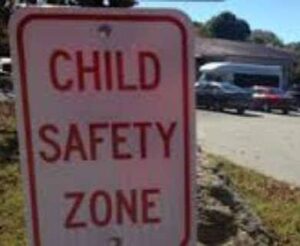
recently considered legislation that would make taking my son to parks a felony. He loves parks–walking trails, rolling down big hills, playgrounds, swings. Those are ordinary childhood memories. For us, ordinary things can become illegal.
I am not sure I cope with it, honestly. I write. I work building business organizations. I spend as much time with my son as I can. Mostly, I keep pushing forward because I have to change this for him. Where I am not present, it is not because I choose to be absent. I want to be there, I can be there, and I would be there. The law is the barrier.
That is what gets lost when people talk about registries and restrictions. The registry has my name on it, but my son feels its consequences too. He has done nothing, yet he can lose memories, experiences, and time with his father because of something I did before he was even born.
I am not dismissing accountability. I am asking when enough is enough. If society believes people should pay forever, then they should be kept locked up forever. But if they are released, they should be allowed to rebuild, work, grow, have a family, and live differently. What are we accomplishing when punishment to parents becomes punishment to their children?
That is a major reason I wrote An American Sex Offender: A Father’s Fight to Be There After a Mistake That Never Ends. Knowing how society looks at sex offenders, I wrote under the pen name Brent Jovani Falcone because I wanted the story to have a chance to be seen before the label ended the conversation. I wrote it in hopes that maybe we can do better than pretending people never change and that children do not suffer from the consequences.
Imagine something that you did as a teenager following you decades later; then imagine explaining that to your child and why it means you cannot show up for something important to him. If I am to be anathema, so be it. But I will make this truth known.

“I am not dismissing accountability. ”
Accountablity and responsiblity ENDED at the compleation of sentences and probation. The registry circumvents that unConstitutionally by requiring open-ended monitoring and tracking that you’re forced to PAY for. It’s actually offensive when autorities claim “it’s not meant to be punishment” when it sure as hell meets the threshold for it.
Any law that deprives a father or mother from experiencing and partaking in their child’s development, milestones and agency is a crime against humanity.
Agree with you, but I think we need to spend less time saying that the registry is really a criminal system and more time pointing out and insisting that it is a civil regulatorn scheme and them follow that with, “how can you do this, and this, and THIS with a civil system?”
1000% Agreed
Now how do we get lawmakers nationwide to see the error and harm in what was originally intended to be a tool to help protect our children and society from persons who are a true and continuing threat.